Compare Color Negative, Black-and-White, and Slide Film Before You Buy
This page contains Coupang Partners affiliate links; the operator may earn a commission.
Key Takeaway
If you are just starting out, begin with color negative film. Color negative, black-and-white, and slide (color reversal) film differ in look and development, so this post compares them using Kodak's material.
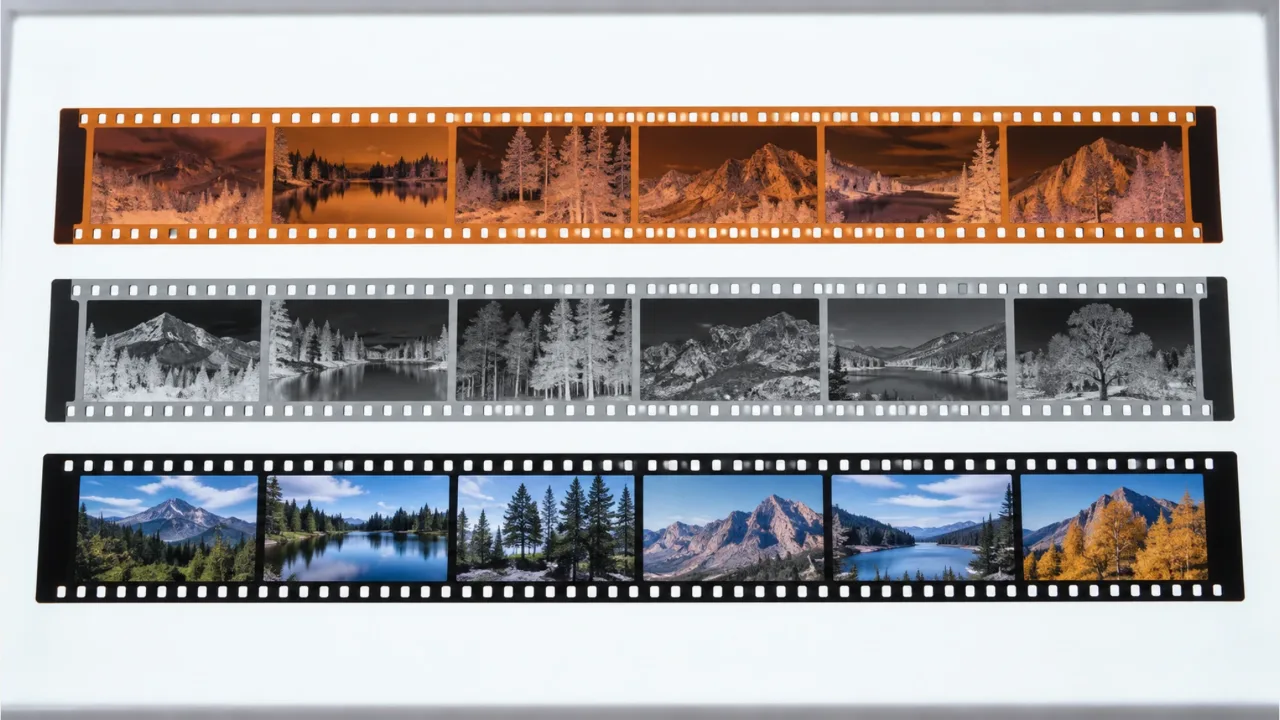
What are the three types of film?
Kodak's material divides film into three types. Color negative is recorded as a negative with the colors reversed, and black-and-white negative records only light and dark, without color. Slide film is what Kodak calls color reversal film, and once developed it gives a positive image you view by transmitted light.
All three load into the camera the same way. What differs is the film speed you pick and the development process you ask for at the lab.
How do the three compare at a glance?
| Type | Kodak product example | What Kodak's material says |
|---|---|---|
| Color negative | Gold 200 | ISO 200, C-41 development process, exposure latitude from 2 stops under to 3 stops over |
| Color negative | Ektar 100 | ISO 100/21°, low-speed color negative for daylight |
| Black-and-white negative | Tri-X 400 | High-speed panchromatic black-and-white negative, push processing possible |
| Slide (color reversal) | Ektachrome E100 | ISO 100/21°, for daylight, developed in the E-6 system, designed for scanning |
The date checked is 2026-10-13. The values in the table come from Kodak's product pages and the Gold 200 technical data sheet (E-7022). Information that is blank was left out because the page does not state it.
Why is color negative often recommended for beginners?
The reason Kodak's material supports is exposure latitude. The Gold 200 technical data sheet gives a wide latitude, from 2 stops under to 3 stops over. That means there is room for your exposure to be a little off.
The development process is C-41. The Gold 200 document calls for the C-41 process using Kodak FLEXICOLOR chemicals. C-41 is a name widely used at labs that accept color negatives, so it is handy to mention when you drop film off.
When should you choose black-and-white film?
Choose it when you want to build a picture from light and dark and grain instead of color. Kodak describes Tri-X 400 as a high-speed black-and-white negative with a classic grain structure and high edge sharpness. It says the film suits street, portrait, and documentary photography that needs dark conditions, fast shutter speeds, and deep depth of field.
Even at the same 400 speed, black-and-white is developed in a different process from color. Whether a color negative lab accepts black-and-white varies by lab, so ask before you drop it off.
Who is slide film for?
It suits people who want to look at the finished film itself against the light, or who want colors that stay close to the film. Kodak describes Ektachrome E100 as a color reversal film with accurate color reproduction, designed for scanning.
The thing to watch is the process. Kodak says Ektachrome E100 is designed to be developed in the E-6 system. You cannot leave it with a lab that only does C-41, so for slides, find a lab that accepts E-6 development first.
How should you pick your first roll?
- If you want to start in color and widen your choice of labs, pick color negative (C-41).
- If black-and-white pictures are the goal, check which labs accept black-and-white before you buy film.
- For slides, consider them after you have found a place that does E-6 development.
Choose the film format (135 or 120) to match your camera. The catalog list on Kodak's product pages also separates 135 and 120.
Frequently Asked Questions
Is slide film harder to use than color negative film?
Taking the pictures works the same way. The development process is E-6, though, so a lab that only accepts C-41 may not take it. Ask about the process before you drop it off.
Can I just drop black-and-white film off at a color lab?
The process is different, so whether a lab accepts it varies. Ask whether they take black-and-white film before you hand it over.
Do I need to know about push processing from the start?
Not at first. Kodak says Tri-X 400 can be used for push processing, but you can get started perfectly well with standard development.
Sources & Verification Date
- Kodak Ektar 100 product page · Verified
- Kodak Tri-X 400 product page · Verified
- Kodak Ektachrome E100 product page · Verified
- Kodak Gold 200 technical data sheet E-7022 (June 2023) · Verified
All materials have been verified from official announcements and may have changed since verification.