Choose Storage Enclosures for Your Developed Negatives
Key Takeaway
Store developed negatives in enclosures that have passed the photographic activity test, inside a suitably sized box. Paper and plastic have different limits. Add a reference linking each roll to its scans.
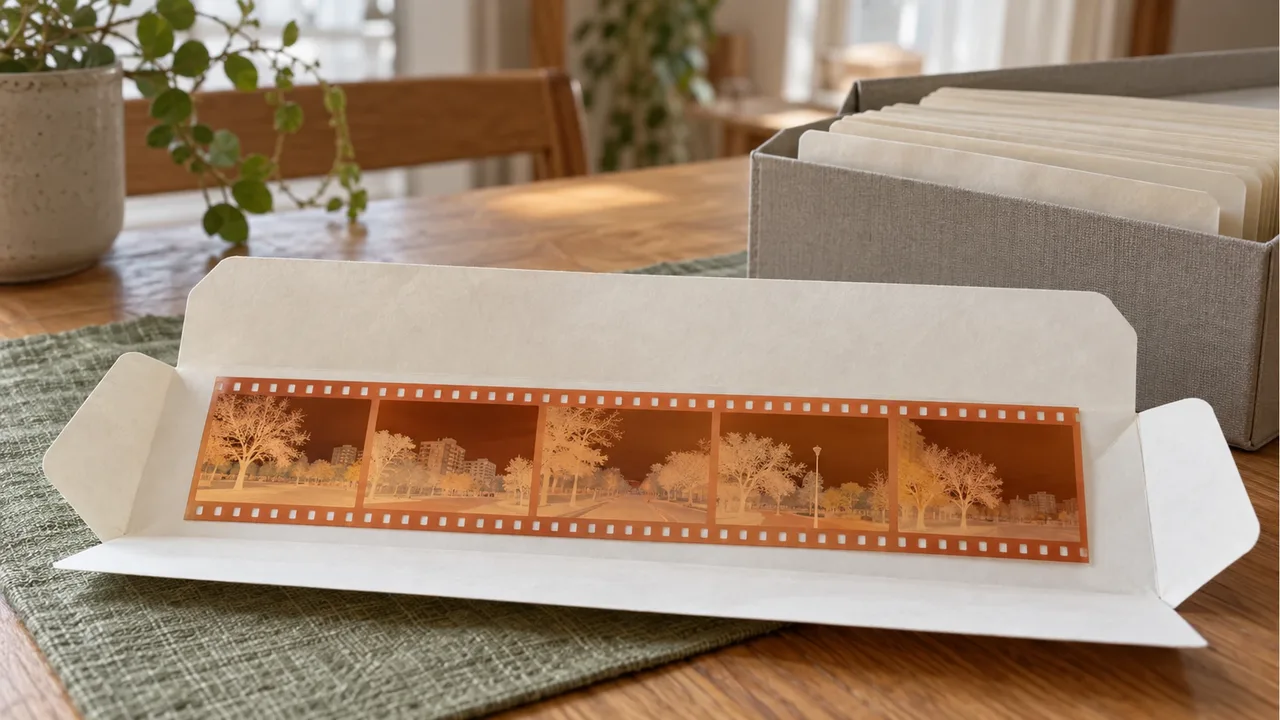
What should you check on a storage enclosure?
The photographic activity test, or PAT, assesses how storage materials affect photographs. The Library of Congress says photographic storage products should pass PAT. Check the material and test information in the product description.
For paper enclosures, also check that they are acid-free and lignin-free. The Library of Congress does not recommend alkaline-buffered paper for contemporary color photographic materials. For color negatives, check buffering and intended use as well as the acid-free label.
How should you choose between paper and plastic?
| Check | Paper enclosure | Plastic enclosure |
|---|---|---|
| Basic information | Look for acid-free, lignin-free, and PAT-tested | Look for material, coating information, and PAT-tested |
| Material conditions | Buffered paper is not recommended for color photographic materials | Listed options include uncoated polyester, polyethylene, and polypropylene |
| Exceptions | An ordinary paper envelope is not automatically suitable for preservation | The guidance excludes glass-plate, nitrate, and acetate negatives |
| Viewing the contents | Open the enclosure to inspect | Transparent, but photographic emulsions may stick at high humidity |
The Library of Congress photograph and negative FAQ was checked on October 17, 2026. A list of suitable plastics does not make plastic safe for every negative. If you do not know the film base, ask the lab or a photograph conservator first.
Check the markings and material of enclosures supplied by your lab, too. If the material and test information are missing, ask the supplier before choosing storage materials.
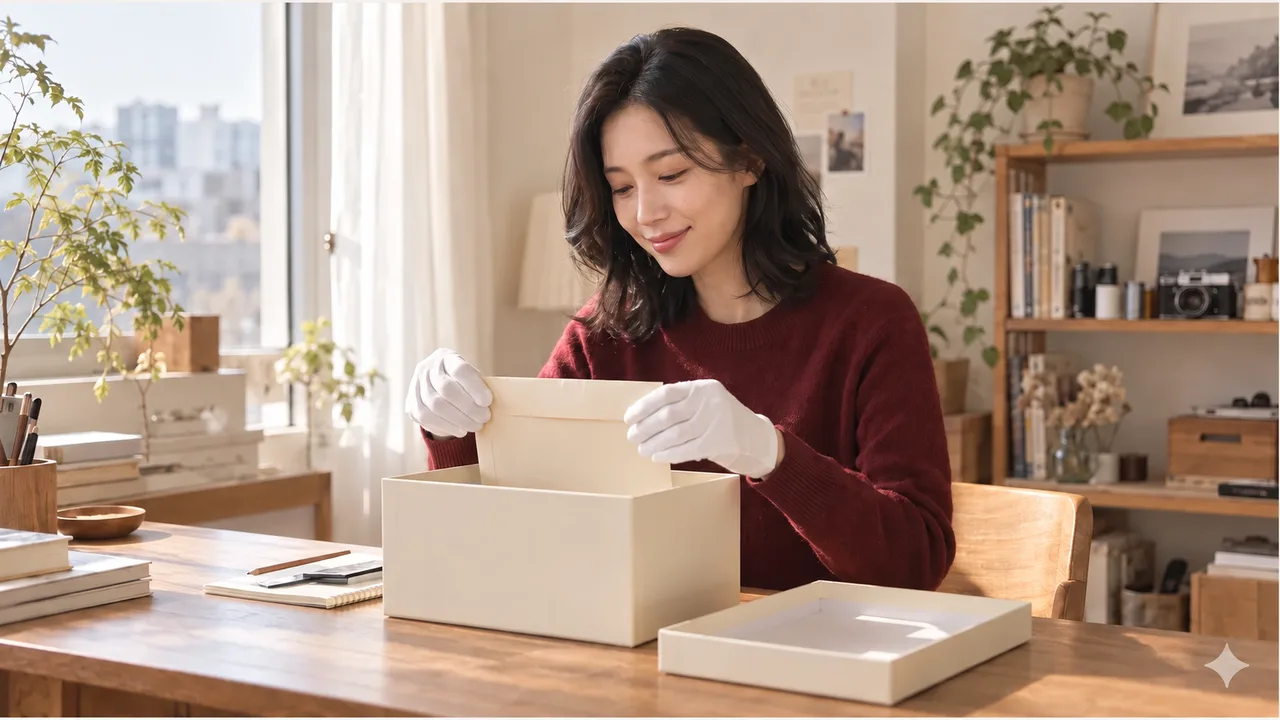
What should you watch for when moving negatives?
The U.S. National Archives recommends preparing a clean, clear workspace and wearing gloves to handle photographs and negatives. Remove food and drinks first. It warns that fingerprints can leave permanent stains.
The Library of Congress also recommends handling photographs by their edges or housing whenever possible. Even with gloves, do not rub the image-bearing surface. Move items in their enclosures when possible.
Choose a box that holds the film without folding or bending it. The U.S. National Archives recommends a suitable fit that prevents shifting without overfilling. Avoid storage near leaky windows or pipes, in damp basements, or in hot attics.
How can you link scans to their originals?
For easier retrieval, give each roll's enclosure and scan folder the same reference number. For example, you could use roll-001 and record the shooting date and film name in a separate list. This number is an organizational example.
Put notes on the outside of the enclosure or on separate paper rather than on the film surface. When requesting another scan, give the lab the reference number and the frame you want. Mark the roll numbers on the outside of the box so you can find them without opening every enclosure.
Frequently Asked Questions
Can I discard negatives once I have the scans?
Keep the originals if you plan to scan them again. Giving the scan folder and enclosure the same reference number makes it easier to find a frame later. There is no single retention period for every situation.
Can I put film straight into my home refrigerator?
The U.S. National Archives says cold storage needs special packaging and procedures. Do not interpret this as permission to refrigerate developed film in an ordinary envelope.
Can I secure film inside an enclosure with adhesive tape?
The Library of Congress advises against adhesive tape. Do not stick tape to the film. Choose an enclosure large enough to prevent bending or protruding edges.
Sources & Verification Date
- Library of Congress FAQ on preserving photographs and negatives · Verified
- U.S. National Archives tips for handling family papers and photographs · Verified
- U.S. National Archives guide to storing family papers and photographs · Verified
- Library of Congress care, handling, and storage of photographs · Verified
All materials have been verified from official announcements and may have changed since verification.